
Bosque Colombiano Foundation | ECO-TOURBIO Project | 2023–2024
In the Colombian Amazon basin, biodiversity offers Indigenous communities an opportunity to develop sustainable livelihoods while protecting their ancestral territories. Yet limited tourism infrastructure and restricted access to commercial markets have prevented many Tikuna families from benefiting economically from the forests they conserve. Through the ETHNOPROGRAM TO PROMOTE SUSTAINABLE TOURISM IN THE COLOMBIAN AMAZON, we worked to address these barriers by connecting community-led birdwatching with digital technology and responsible tourism.
Supported by a USD 100,000 grant from ECOCEANOS CORPORATION, alongside USD 10,000 in institutional counterpart funding, we implemented a 12-month intervention from September 2023 to September 2024. Our objective was to improve the socioeconomic and environmental conditions of 600 Tikuna Indigenous families by strengthening birdwatching tourism capacities enhanced with augmented reality technology.
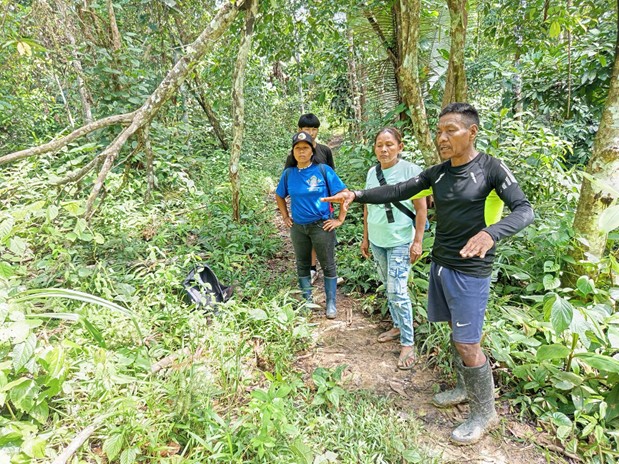
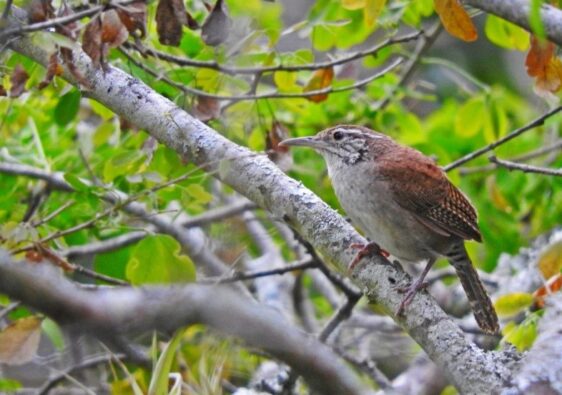
PHOTO 1 — Tikuna community members participating in birdwatching activities within the Amazon rainforest.
Turning Biodiversity into Community Tourism Opportunities
Our intervention focused on a 10,537-hectare Amazonian landscape, where forest conservation and Indigenous livelihoods are closely connected. We developed a community tourism model based on guided birdwatching experiences, supported by digital interpretation tools that help visitors understand Amazonian bird species without disturbing their habitats.
We introduced augmented reality as an educational resource for identifying birds and explaining their ecological importance. This technology enables local guides to communicate biodiversity knowledge while maintaining community control over sensitive wildlife locations.
Community observation centres provided the physical foundation for these experiences. We equipped operating sites with binoculars and spotting scopes, allowing visitors to observe wildlife under locally defined conservation rules.
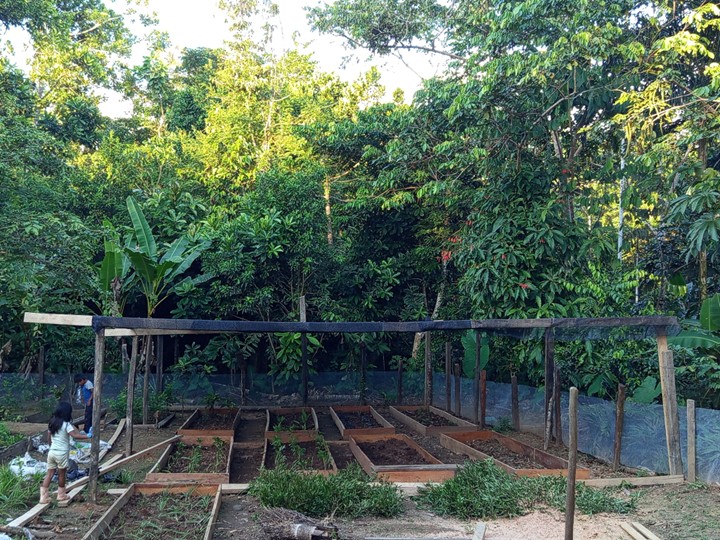
PHOTO 2 — Birdwatching observation centre showing installed equipment and community-guided interpretation.
Strengthening Tikuna Youth and Women’s Economic Participation
We placed Indigenous participation at the centre of implementation. Our training programme prepared Tikuna youth to develop practical competencies in bird identification and visitor management.
At the April 2024 monitoring milestone, 65 young people were participating in structured training, including 36 women. Forty-two participants had already passed an interim practical assessment.
We also supported the establishment of an Indigenous Tourism Secretariat to coordinate tourism operations under Tikuna governance. This process strengthened opportunities for women to assume technical responsibilities and participate in decisions concerning community tourism.
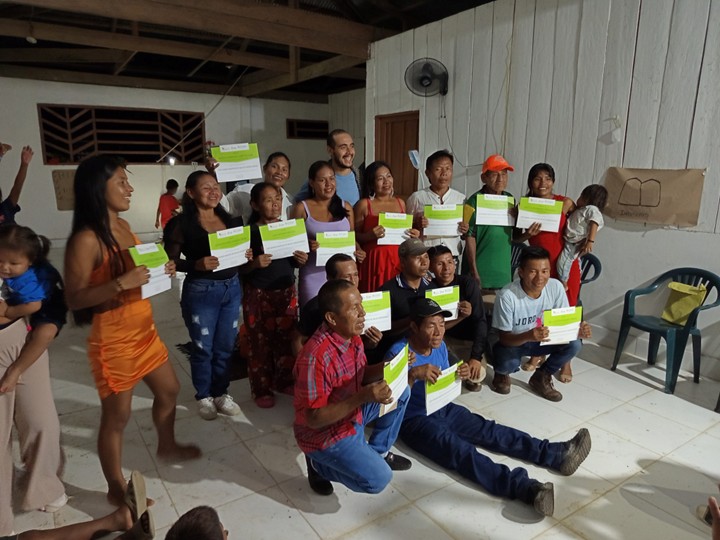
PHOTO 3 — Tikuna women and young participants during practical tourism training or community governance activities.
Connecting Local Enterprises with Tourism Markets
We developed a trilingual digital platform in Spanish, English and German to connect Indigenous tourism services with potential visitors. Its reservation system supports transparent commercial management.
By April 2024, our promotional activities had reached 2,640 potential visitors and generated 285 traceable bookings. We also began integrating Tikuna microbusinesses into the tourism value chain through digital service profiles.
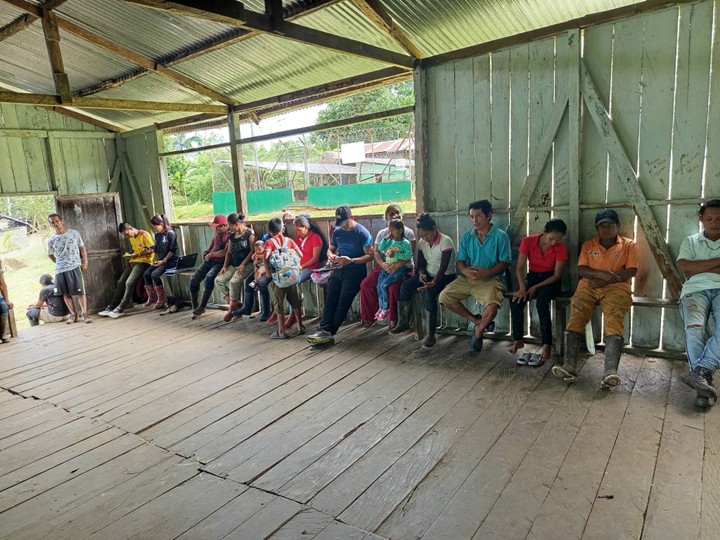
PHOTO 4 — Tikuna tourism entrepreneurs presenting community services or demonstrating the digital booking platform.
Building a Sustainable Legacy
Our implementation established practical foundations for community-managed tourism. We connected biodiversity interpretation with local enterprise development while respecting Indigenous authority over territorial decisions. Through ECO-TOURBIO, we advanced a model in which tourism demand can support conservation-compatible livelihoods. We remain committed to strengthening Tikuna leadership and ensuring that the Amazon’s biodiversity continues generating opportunities for the communities responsible for protecting it.